My Unique Experience Travelling to Japan

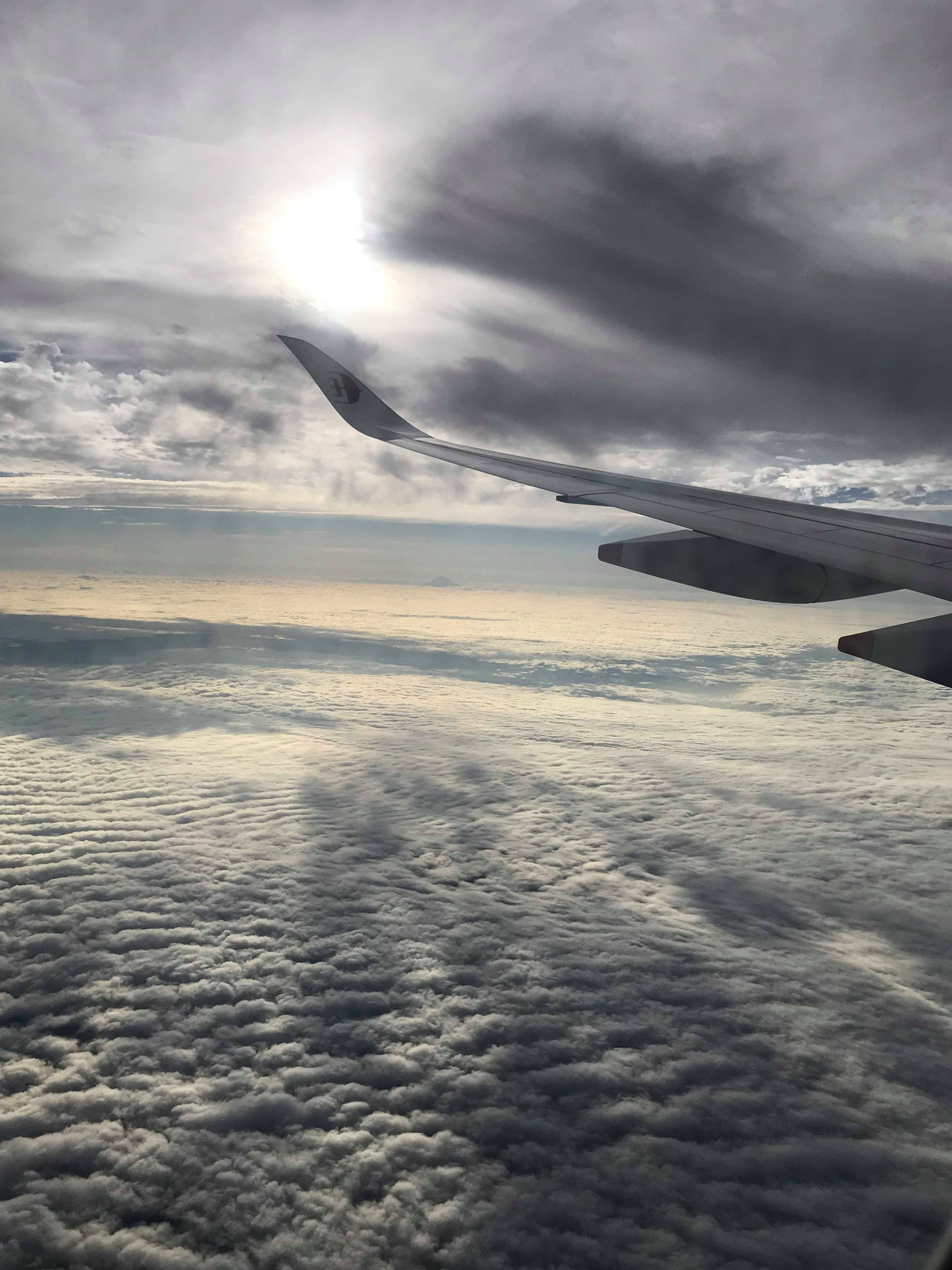
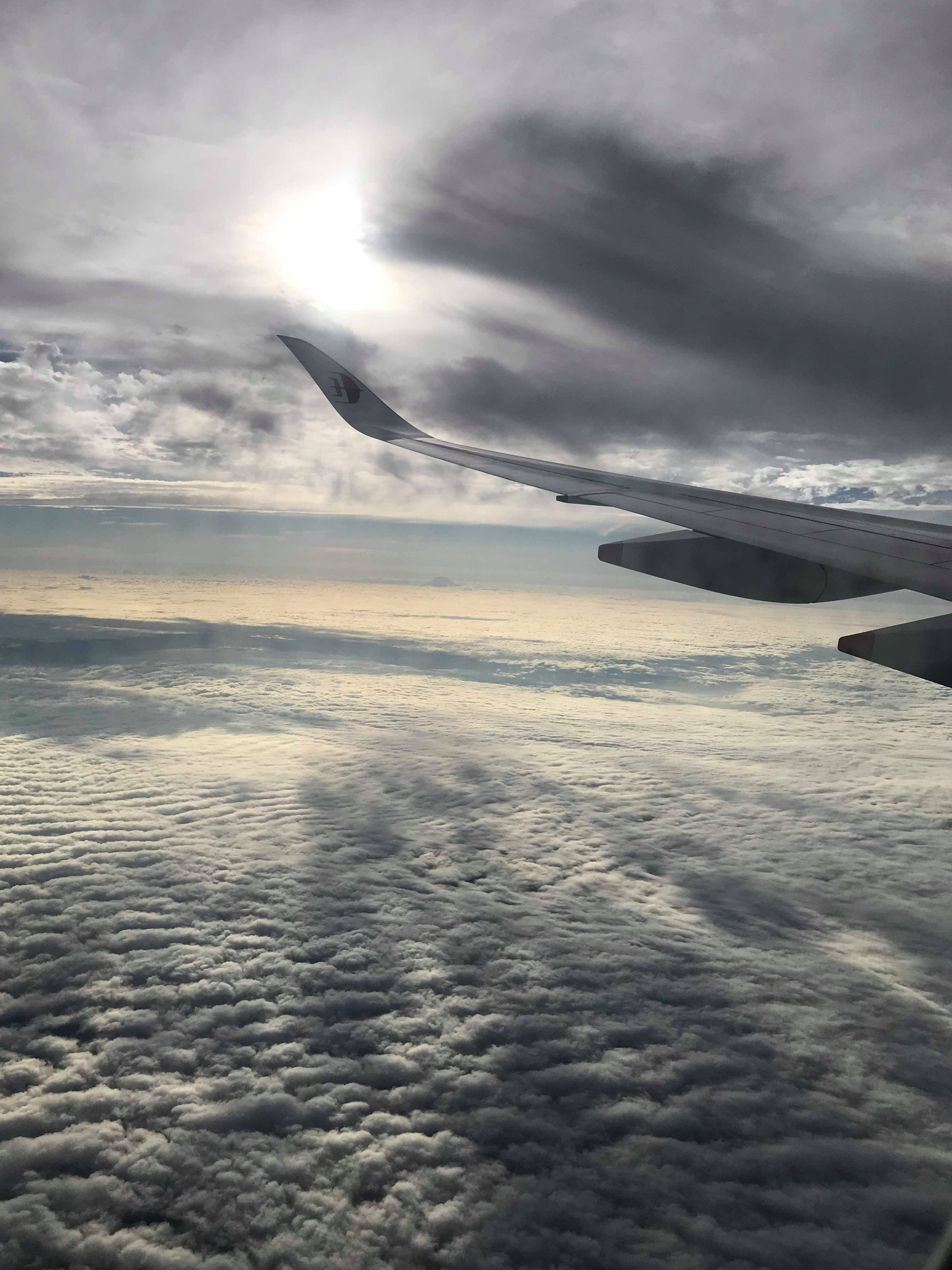
My view on the way to Tokyo

Thursday the 11th of July – finally in a couple hours I would be on my flight to a trip that I’d been looking forward to for the past two months. The last couple weeks for me had been hectic as I was making my way to the shops almost everyday in order to buy all my travel necessities – as I kept forgetting little things here and there. However, after a million shopping trips and sleepless nights, I was finally ready to say good-bye to my house for two weeks and hop on the trip of a lifetime.

The first leg of the trip (from Perth to Kuala Lumpur) was quite easy going and stress free. The only slight problem was that our flight was delayed by 40 minutes from Perth because of an unknown issue, however this wasn’t too serious as this didn’t effect our connecting flight. However, as soon as we landed in Malaysia – the troubles began (for me personally). Shortly after landing – my travel buddy Andy and I made our way to the other side of the airport to a different set of boarding gates as we thought we would be catching our flight from there. However, upon further critical inspection (information centre) we discovered that our flight was actually from the gates that we had initially landed at – and there was no need for us to change our gates. Because of this, I had to make a hectic run through from one side of the airport, to another within 20 minutes as I was super close to missing my flight. After this happened, I thought that my troubles were over and that the rest of my travels would go easy – but that was far from it.

We landed at Narita Airport around 6:10pm on the 12th of July, after making our way through customs we went towards our baggage carousal for luggage pickup where I had another surprise waiting for me. Turns out my luggage was never put onto our flight (she explained that there was a very short amount of time transporting luggage from one flight to another) and well .. I didn’t have my suitcase. If almost missing my flight wasn’t bad enough, I had another situation here to deal with, the case of the missing suitcase. After an hour of going back and forth with the Narita Airport representative I was told that my suitcase would reach my hotel room the next day around 6-9pm. To say that I was upset, angry and confused was a major understatement, however I understood that this had happened to many other people on the flight and that I wasn’t the only one suffering with no luggage and no clothes, which made me feel slightly better. My only other issue now was figuring out what to wear for the next 24 hours until my suitcase gets delivered to my hotel.

After leaving the airport we used the Narita Express to go down to Shibuya from where we caught the den-entoshi line which takes us to Kajigaya (where our hotel is). This whole train ride was a bit of a struggle, mainly for Andy as I saw how troublesome it was carrying around a suitcase through the station – which made me feel slightly better about me not having my suitcase. Walking towards our hotel we noticed there was a family mart a 100m away from us. After settling in to our rooms we decided to head down to the family mart to buy some necessities (and a pair of pyjamas for me), which somewhat acted as my outfit for the next day.

So far this travel experience was more than what I had bargained for to say the least, and at no point was I expecting it to go like this. But I guess it was more of a blessing in disguise that I didn’t have to carry my 25kg suitcase down multiple sets of stairs around a very crowded train station.
My Experience at Pasona

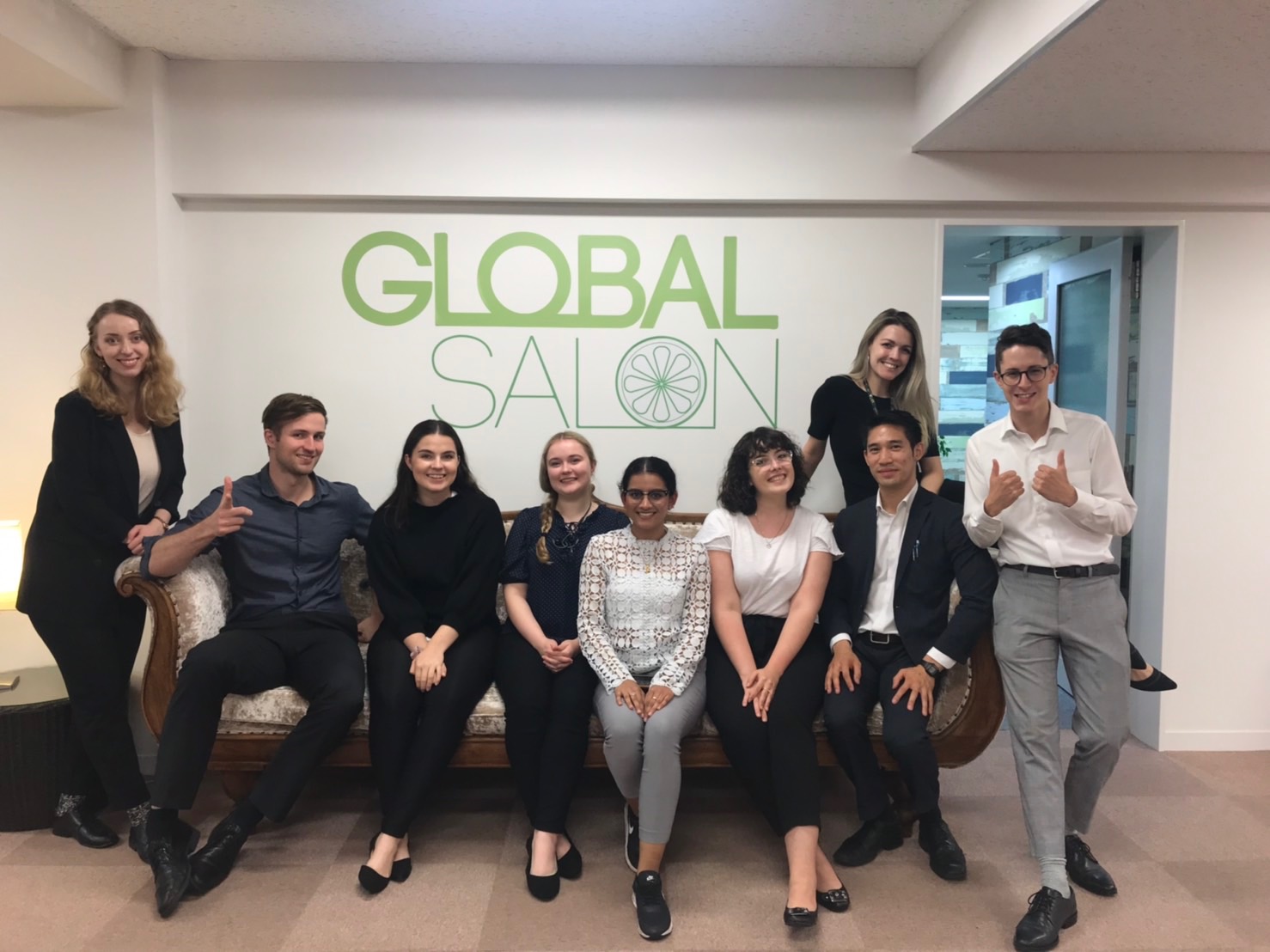
On the second week of our study tour, we had to complete a three-day internship at Pasona – Global Salon. This internship came as a good opportunity for me to learn more about Japanese work ethic and how it differentiates from an Australian work ethic. Our first day in global salon we were introduced to our mentor Kwan, who went through our schedule for the three days that we were interning at Pasona. We were also introduced to our fellow co-workers and learnt a lot about how global salon works and the different activities they promote to their clientele and staff members. During this I learnt that global salon incorporates activities such as teaching English, yoga lessons, dance lessons, art classes, massage booths, etc. These are all facilities provided by Pasona for the staff and clients. This also gives the employees an opportunity to join in on one of these classes (hosted by their co-workers) to learn more.

I started with the first task on our schedule which was being introduced to work+  by Kwan (which is one of his project) and how it aims to create a new stress-free work environment. The main idea of work+ is having a comfortable work environment that does not put too much pressure and stress on an individual (as most Japanese work environments do). By understanding the vision and goals of work+ it allowed me to contribute plenty of specific, target audience aimed ideas on how to grow work+ and have it make an effect within a workplace. However, the only issue was that there were too many ideas floating around for too many different things. My group and I realised from an early point on that this project needed to be more structured/defined at its core before we could start contributing any meaningful ideas which would help the project grow. This meant that our task for the next two days was to narrow down the vision of work+ and start of with the basics.

During my second day at the internship I was also helping out with the kids painting class (aged 7-10). I worked with my colleague on helping set up the class, distributing paint for kids and looking out for any of their needs. This was a fun experience for me as working with kids is always interesting and lively. During this painting class the kids and their mothers also got to practice their English with us in a much more comfortable and relaxed environment. The painting class involved instructions mainly in English (and some help in Japanese), however it seemed like the instructions in Japanese didn’t really matter to the kids as they appeared more comfortable with English. They were more than willing to interact with us in English and felt comfortable in doing so. Helping the kids and their mothers learn English was a great experience for me as throughout my stay in Japan, while interacting with people I have to come to realise that not many locals can speak English. Therefore seeing so many kids being comfortable with conversing in English was a heart-warming scene.

During this three-day internship we covered long hours as we would often start from 8-9am and finish at 6pm, which made me realise how different the work ethic in Japan actually is from Australia. In Japan people would usually work long hours and even take overtime tasks (without getting payed extra), which shocked me because I couldn’t see a reason as to why anyone would want to voluntarily agree to that. However I also learned that most people working in Japan happen to be workaholics (which would explain the long hours), or they just don’t feel confident in speaking up and wanting to change the system (as they are too used to the work environment).

This made me feel incredibly lucky for the healthy work environment we have in Australia, as I saw that in Japan there isn’t much flexibility granted to the employee as there is in Australia. Being at this internship I learned about the contrast between the work environment in Australia and the one in Japan, and the pro’s and con’s of both. While I may not agree with the stereotypical Japanese work environment (long stressful hours, no overpay, no social life, etc), I loved the work environment that Pasona provided us with. It was a fairly social environment which focused on team work and healthy work practices.

teamLabs Digital Art Museum

Earlier on this week I had the amazing opportunity to cut off a major item from my bucket list here in Tokyo – teamLab Borderless Museum. teamLab Borderless Museum is a collection of creatives from various fields uniting in a technological sense in order to expand art (“About teamLab”, n.d.). Founded in 2001, it’s a collaborative group that brings together professionals from various fields of arts and technology together to practice art in digital society. The teamLabs crew consists of architects, engineers, programmers, CG animators, mathematicians, musicians and more.

The success of teamLabs has been undeniable since its opening in 2001, it allows visitors to immerse themselves in a borderless art experience with over 10,000 square meters to wander through (“teamLab Borderless MORI Building DIGITAL ART MUSEUM”, n.d.). The Mori Building Digital Art Museum requires the use of 520 computers and 470 projectors to create an experience that stimulates all senses (“Mori Building Digital Art Museum: A Multi-Sensory Experience”, 2019). The museum is called “Borderless” for the reason that art moves around freely (“Mori Building Digital Art Museum: A Multi-Sensory Experience”, 2019). Walking along the hallways there are always some elements of art that flow freely over the walls. In my experience I saw a moving cow/fox hybrid as well as a kangaroo hopping along the wall (as shown in the photos below), it’s an exhibition that has an ‘open’ feel to it where the art is not limited to one area but rather all around you.

The first room we entered into

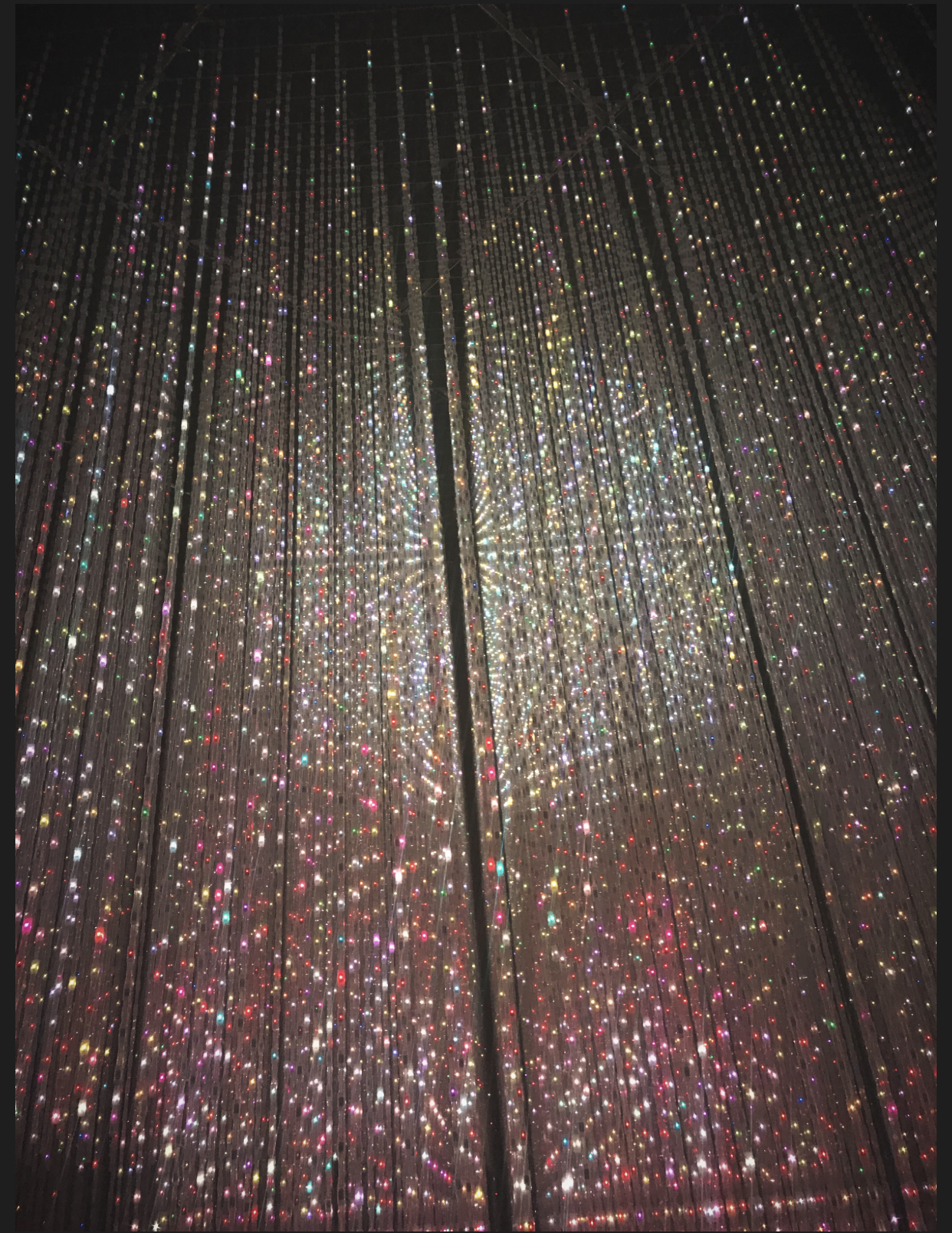
The Mori Building Digital Art Museum’s stunning and out of the ordinary art installations make the perfect backdrop for aesthetic shots, two of the most popular installations are the Crystal World and the Forest of Resonating Lamps. The Crystal World is a room full of mirrors with dazzling and colourful LEDs which allow you to change the colour of the lights (through the teamLabs app). Back when kanji (hieroglyphic characters) were carved into the shell of a turtle, bone of a cow or deer, or cast in a piece of bronze ware it had each character contain an entire world within it (“Mori Building Digital Art Museum: A Multi-Sensory Experience”, 2019). That’s similar to crystal world in the sense that a new world is created when a person summons a certain character which unleashes certain colours and patterns. Crystal world allows customers with a high level of user interaction resulting in perpetual change – meaning the space is reborn moment by moment (“Mori Building Digital Art Museum: A Multi-Sensory Experience”, 2019).

Crystal World

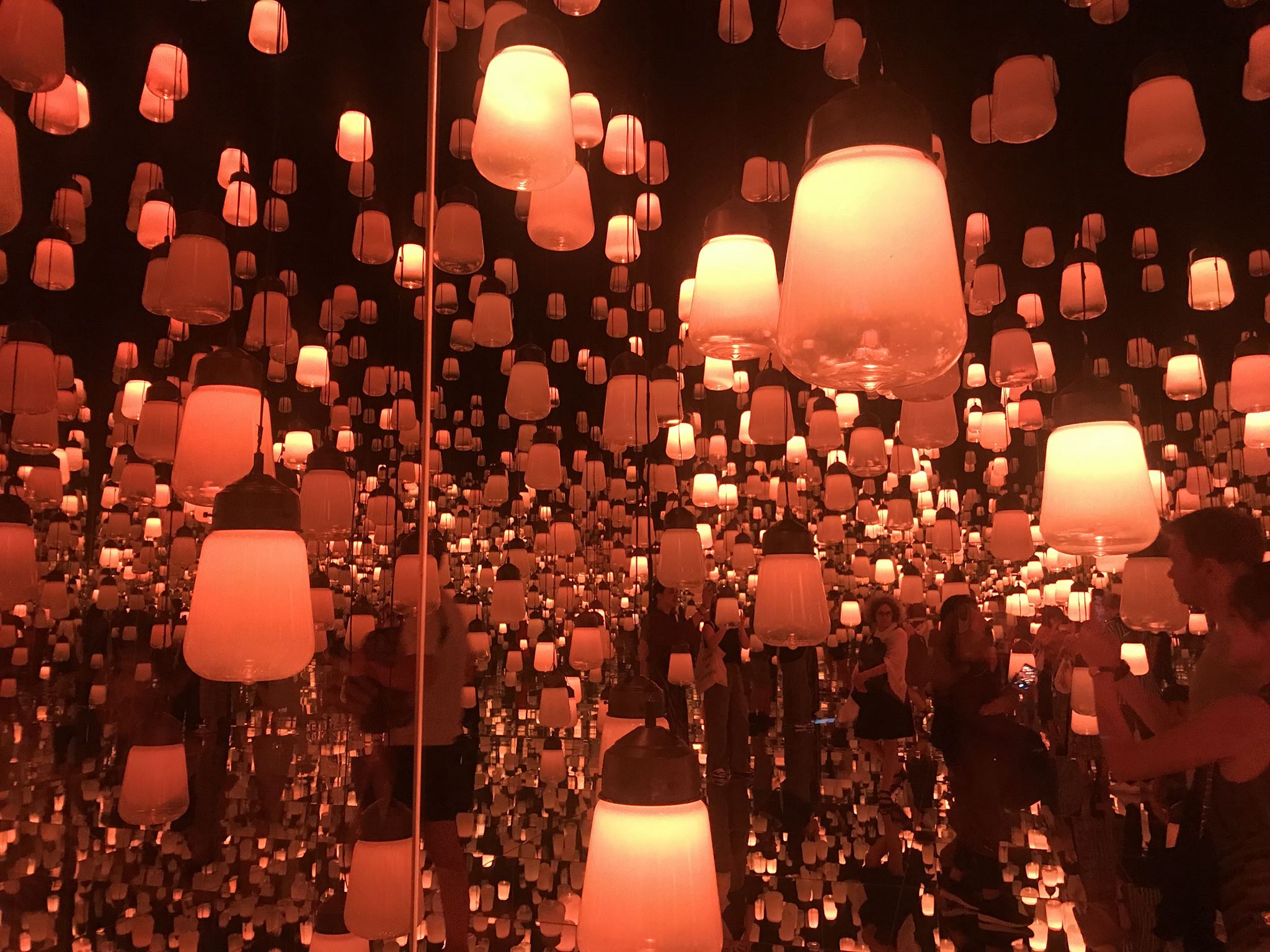
The forest of resonating lamps is a magical room which features dozens of stunning brightly coloured lamps surrounded by mirrored walls to create an immersive user experience where there seems to be no limit and the room is never ending. When a person stands still close to a lamp, it’ll shine brightly and emit a colour that resonates with its surrounding lamps. There are also seasonal lights, different from the traditional bright orange lights. The seasonal lights are only displayed during monsoon-summer season where they turn a beautiful shade of blues, purples, and pinks

Forest of Resonating Lamps

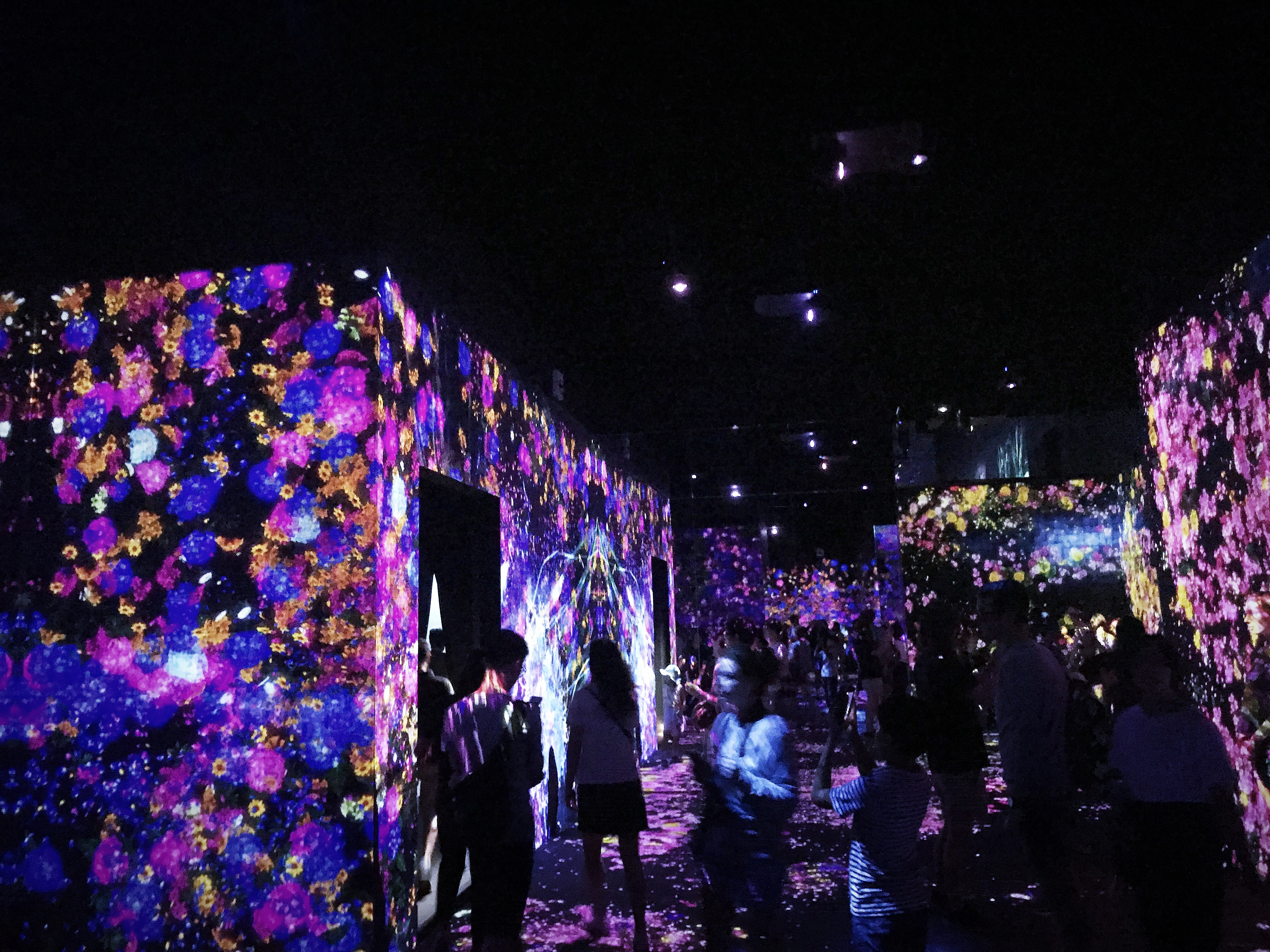
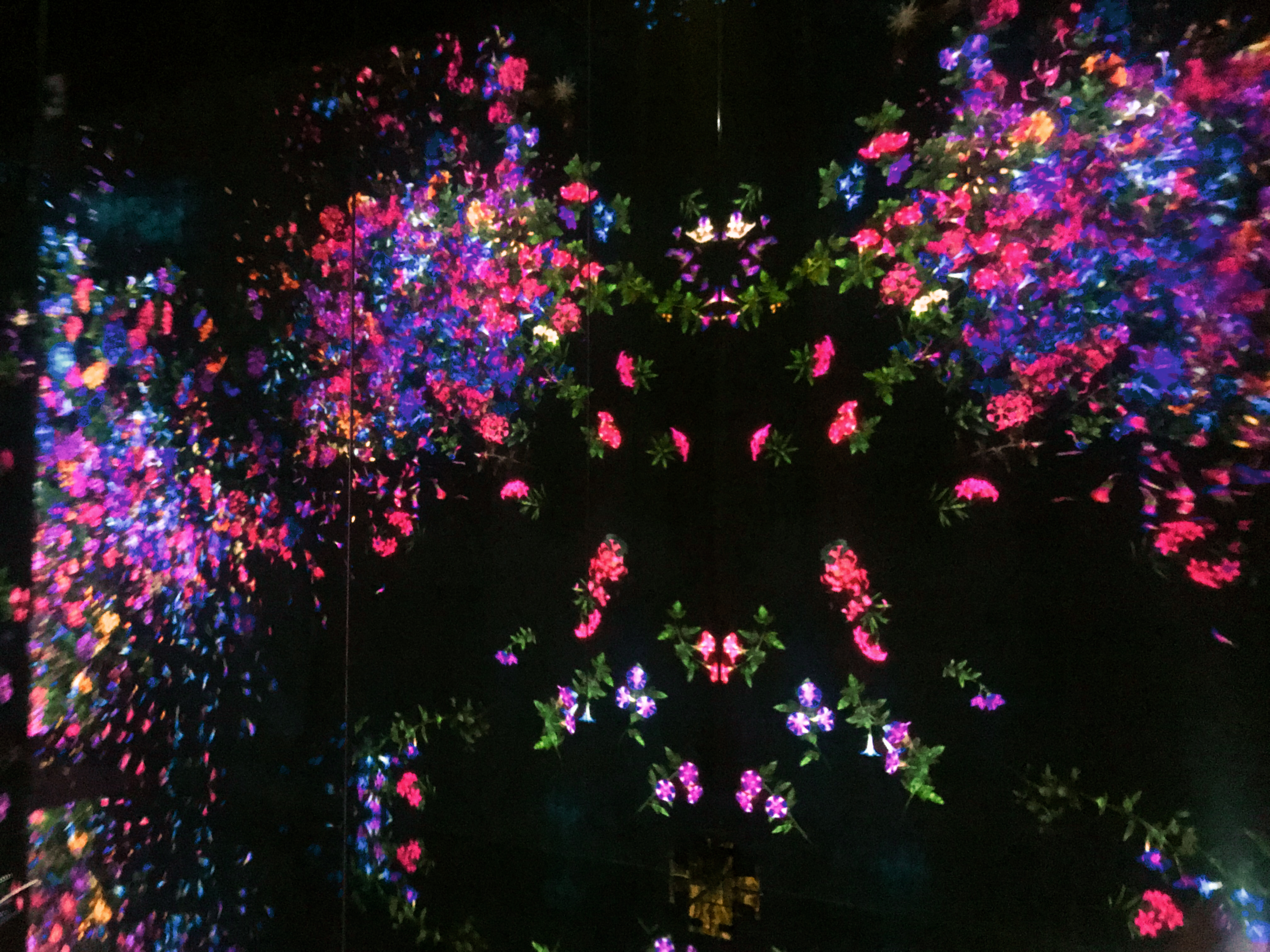
Besides the crystal world and forest of resonating lamps, there are also other popular displays on at teamLabs. One of the largest displays is the Flower Forest: Lost, Immersed and Reborn. In this room the walls, roof and floor are covered with projected flowers – each with its own intricate design. Touching the flowers make them scatter and wilt, while standing on an empty spot will sprout flowers (Bouwers, 2018). The flower designs will change every so often to introduce a new theme. This room is beautifully intricate with its use of special colour coordinated designs which left me wanting to never leave the space.

The Flower Forest

teamLabs main belief is that digital domain can expand art, in the sense that digital art can create a new sense of relationship between art and individuals (“Digital Art”, n.d.). Digital technology enables complex details and freedom for change. Before digital art artistic expressions often had to be displayed in a physical form such as a portrait, or a physical painting, etc. However, with the advent of digital technology it allows human expression to become free from these physical constraints, enabling the art to exist independently and evolve freely (“Digital Art”, n.d.).

References

About teamLab. Retrieved 30 July 2019, from https://www.teamlab.art/press/digitalmeetsculture1507

Bouwers, K. (2018). Guide to the Mori Building Digital Art Museum Epson teamLab Borderless. Retrieved 30 July 2019, from https://www.timeout.com/tokyo/art/guide-to-the-mori-building-digital-art-museum-epson-teamlab-borderless

Digital Art. Retrieved 30 July 2019, from https://www.teamlab.art/concept/expandart/

Mori Building Digital Art Museum: A Multi-Sensory Experience. (2019). Retrieved 30 July 2019, from https://tokyocheapo.com/entertainment/mori-building-digital-art-museum-teamlab-borderless/

teamLab Borderless MORI Building DIGITAL ART MUSEUM. Retrieved 30 July 2019, from https://borderless.teamlab.art/

Origin of Buddhism

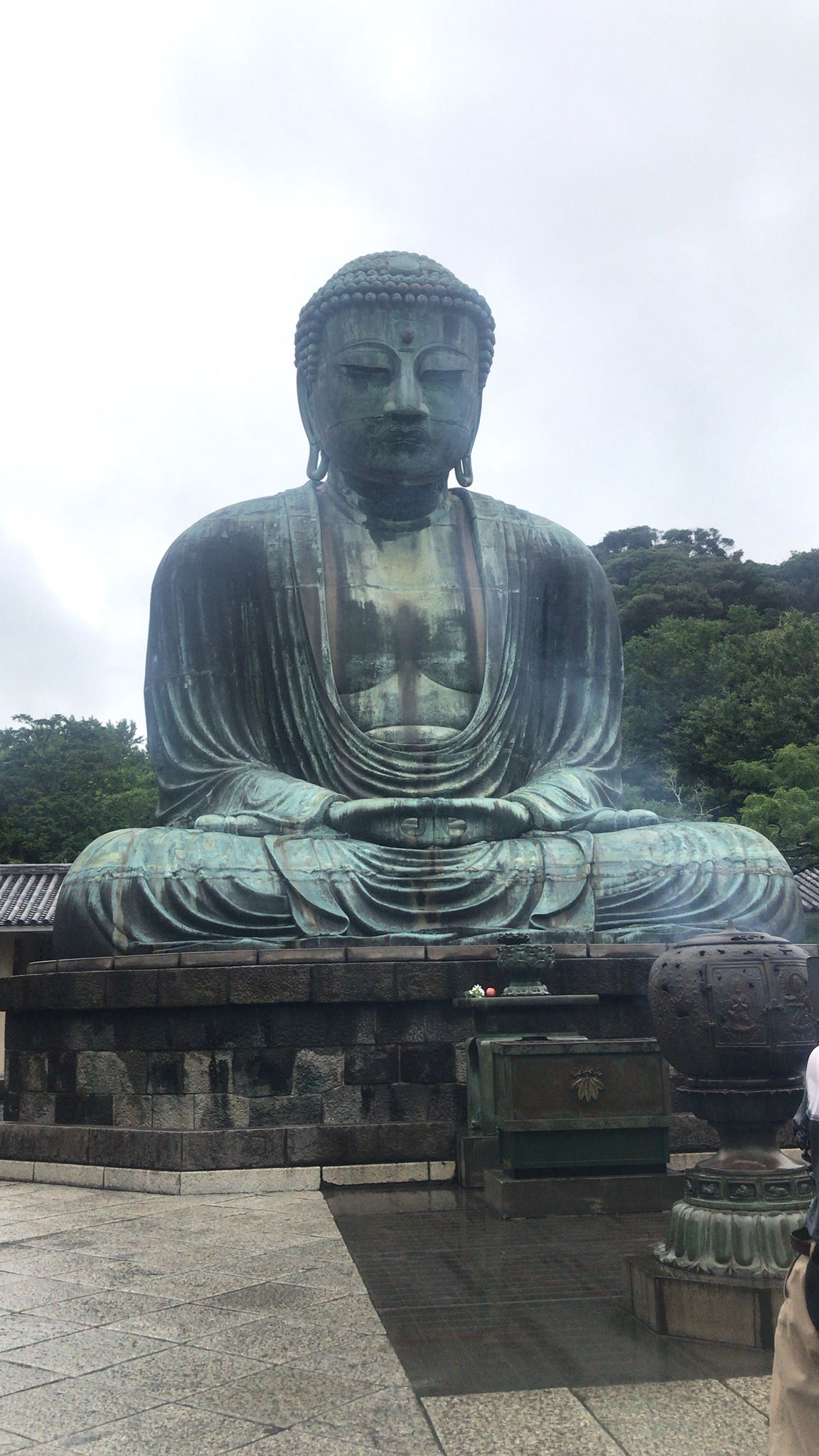
Visiting the Great Buddha last Tuesday had intrigued me to learn further about Buddhism and where and how it was originated, and some insight on Buddha’s life. Buddhism was first originated in India during the 6th century BC (“Japanese Buddhism”, n.d.). It consisted of the teachings of Buddha – also known as Siddhartha Gautama in Sanskrit or Siddhatta Gotama in Pali (Gethin, 1998). He was born near the border of Nepal and India in 6th Century to a wealthy family, being born with the status of a prince in the Shakaya Kingdom in modern-day Nepal (“Siddhartha Gautama”, n.d.). Upon being aware of the mass amounts of suffering humans face, he left his kingdom to become ascetic (practicing strict self-denial as a measure of personal and especially spiritual discipline (“DEFINITION OF ASCETIC”, N.D.). After becoming ascetic he developed the Middle Way which refers to Buddha’s enlightened view of life and also the actions or attitudes that will contribute towards creating happiness for oneself and others (“The Middle Way”, 2015). The search for the Middle Way is considered an endless pursuit for all Buddhist traditions. It is a quest for the way of life which will give the greatest value to human existence and help relieve humans from their world of suffering (“Siddhartha Gautama”, n.d.).

(Buddha Praying, 2019)

Being born a prince, Gautama had enjoyed every physical comfort and pleasure that life had offered him from an early age due to his family heritage. However, dissatisfied with the temporary pleasures, he set out on a search for a more meaningful truth (“The Middle Way”, 2015). During this period he was participating in extreme ascetic practice such as depriving himself of food and sleep which had almost bought him to his physical collapse (“The Middle Way”, 2015). However, upon sensing that his method of extreme ascetic was not helping him on his search, he began meditation with the eagerness to discover the truth of human existence. It was then during his rejection of self-mortification and self indulgence that Gautama had discovered the true nature of life – its eternity and bountiful supplies of vitality and wisdom (“Siddhartha Gautama”, n.d.).

He then spent the next 45 years preaching his philosophy across what is today known as Northern and Eastern India and Nepal. As he gained followers, he established his first sangha – body of Buddhist monks who would later go on to preserve and spread his teachings after his death (“Siddhartha Gautama”, n.d.).

By founding Buddhism, Siddhartha Gautama has forever altered the religious, social and cultural aspects of East and Southeast Asia. He influenced many individuals at that time who passed the information forward onto many generations to come.

The Giant Buddha in Kamakura

References

Buddha Praying. (2019). [Image]. Retrieved from https://biographics.org/siddhartha-gautama-biography-the-buddha/

Definition of ASCETIC. Retrieved 22 July 2019, from https://www.merriam-webster.com/dictionary/ascetic

Gethin, R. (1998). The foundations of Buddhism (p. 14). Oxford [England]: Oxford University Press.

Japanese Buddhism. Retrieved 22 July 2019, from https://www.japan-guide.com/e/e2055.html

Siddhartha Gautama. Retrieved 22 July 2019, from https://berkleycenter.georgetown.edu/essays/siddhartha-gautama

The Middle Way. (2015). Retrieved 22 July 2019, from https://www.sgi.org/about-us/buddhist-concepts/the-middle-way.html

The Contrast in Japan

It’s been 8 days since I landed in Japan and I’ve been granted with the most amazing opportunities to visit and see many amazing landmarks, shops and interesting suburbs. However one of the most interesting points I’ve noticed about Japan is that it seems to have an equal balance between the luscious greens and the sea of neon lights and tightly packed skyscrapers. Before I arrived, if someone had asked what I thought it would’ve been like over here I would’ve said “oh it’s probably all skyscrapers and hectic crowds, etc”, but over the past couple days of travelling to different areas and experiencing the more traditional aspects I’ve come to realise that Japan is a country filled with mass amounts of dichotomy – between the old and the new.

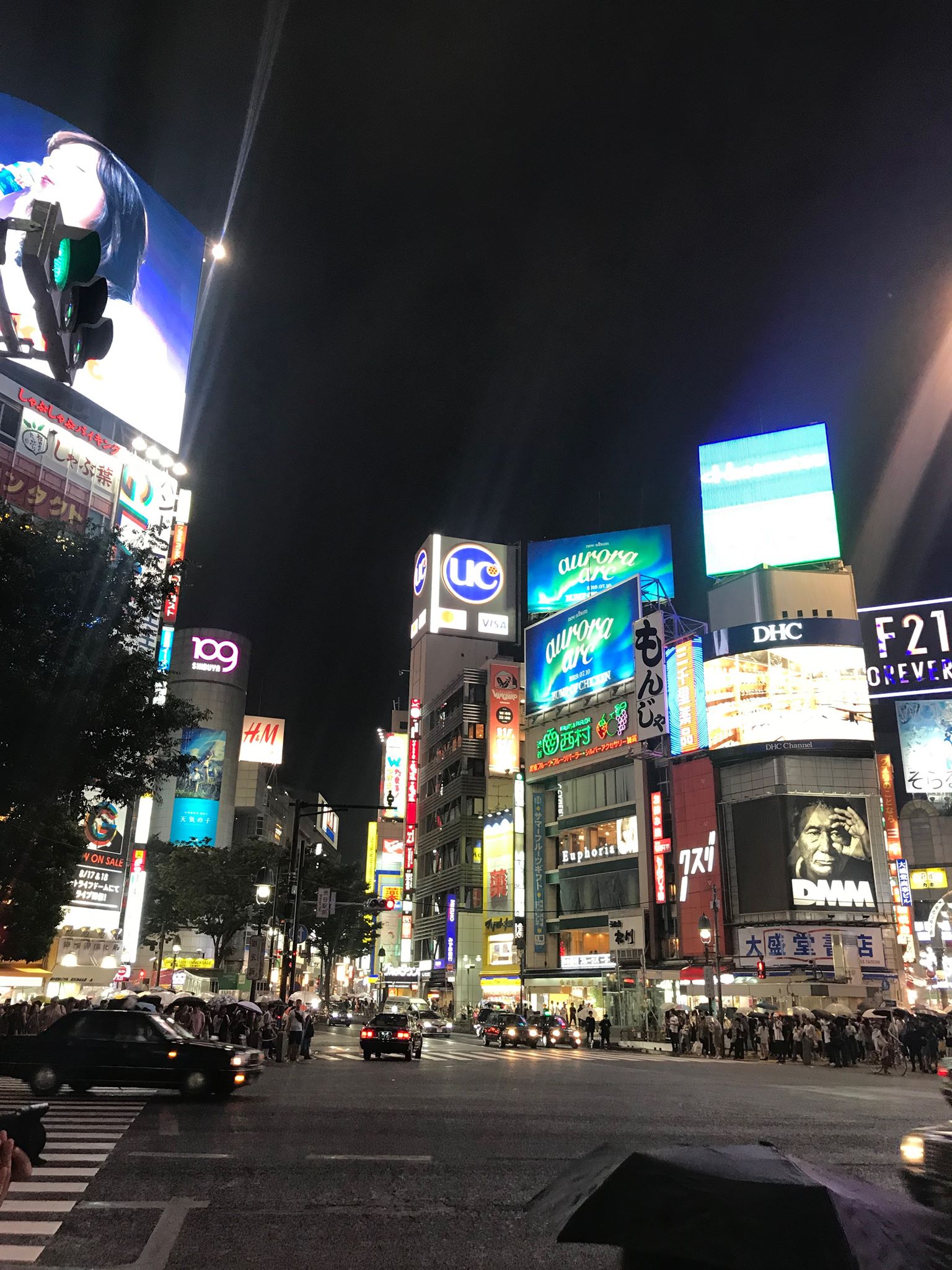
My first day in Tokyo was jam packed to say the least. Being in-between the tumultuous crowd was definitely a new experience for me here. According to statistics, it is noted that as many as 2500 people cross the streets every time the light changes (Joy, 2019), with over two million passengers a day (“Shibuya Crossing at Shibuya | Japan National Tourism Organization (JNTO)”, n.d.). This was definitely a one of a kind experience for me knowing that I was in-between thousands of people in a city that never truly sleeps. This made me wonder how Shibuya came to be so swarmed by mass amounts of crowd and covered in eclecticism. First opening in 1885, Shibuya Station acted as a stop on the Nippon Railway’s (Akabane) Shingawa Line (Hornyak, n.d.). During that time it was known as a ‘sleepy residential backwater area’ (Hornyak, n.d.), however four years later it grew into a commercial and entertainment district quite quickly, going as far as to incorporate a village in 1889 (Hornyak, n.d.). In 1927, Tokyu Corporation had began constructing a railway service that would link down to Yokohama – setting Shibuya on the path to becoming one of the biggest railway line hubs (Hornyak, n.d.). One of the most popular story concerning Shibuya would have to be the story of Hachiko. A loyal dog who awaited his owners return after his death (“Shibuya Crossing at Shibuya | Japan National Tourism Organization (JNTO)”, n.d.). This tear-jerking story was later adapted into a famous 2009 Hollywood movie (titled Hachi) which added to the popularity of Shibuya (which displayes the Hachiko statue).

Shibuya Crossing at night

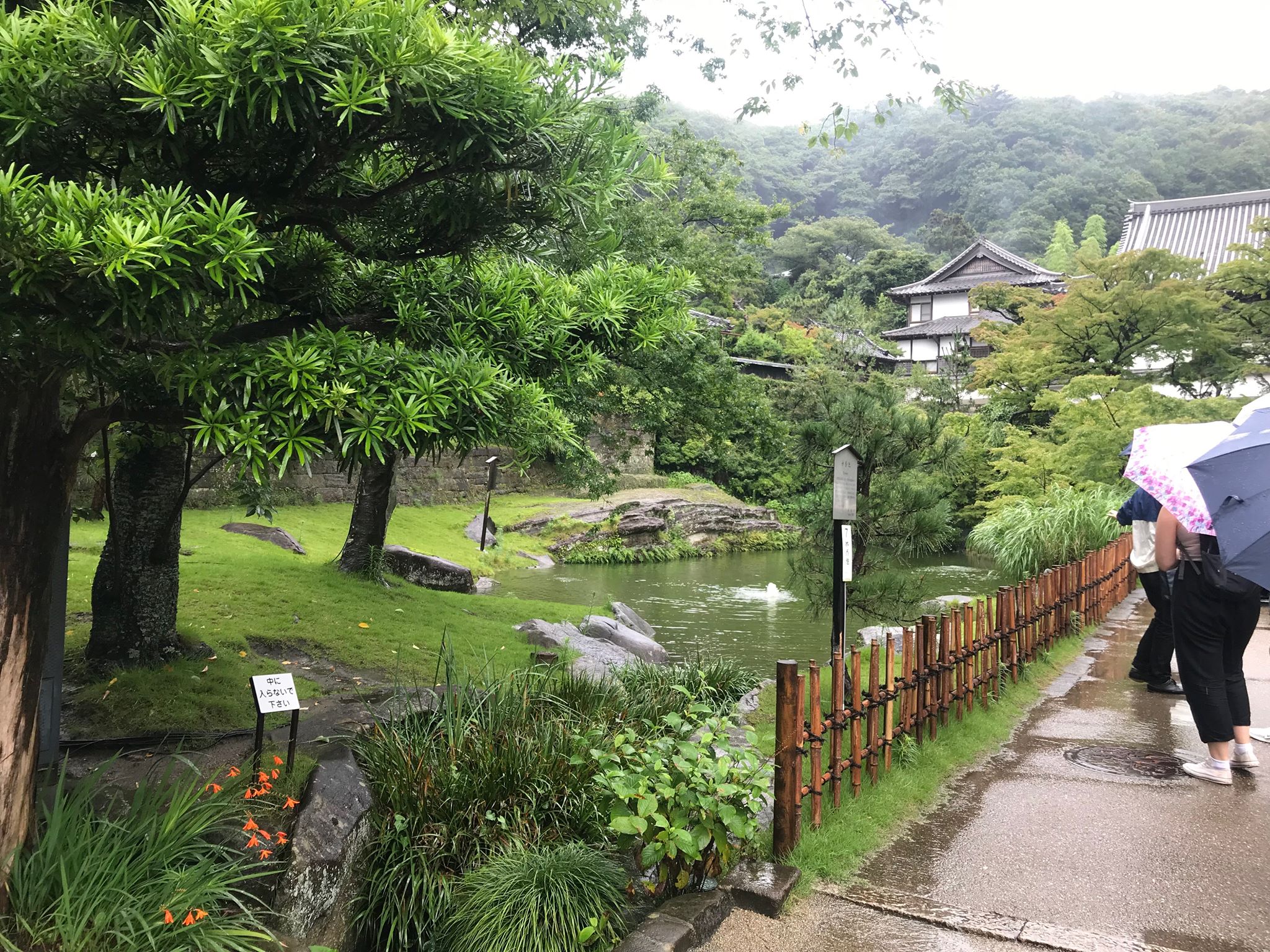
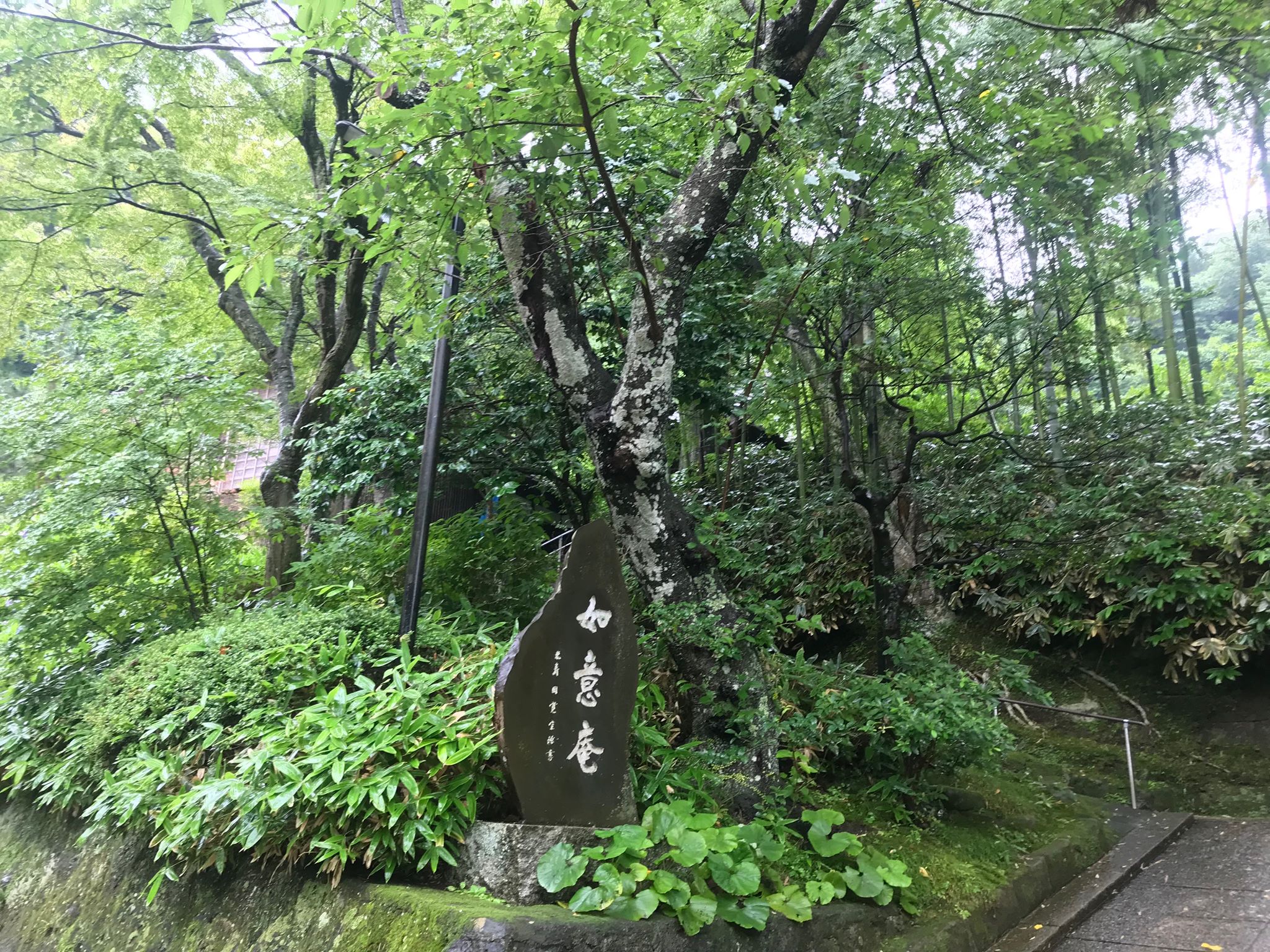
Experiencing the rush of the city in Tokyo had exceeded all my expectations, however it left me feeling incredibly fatigued and run-down. This left me wondering what the contrast of the bright city would be like, and how it would feel to be between the much more peaceful and calming side of Japan. On Tuesday (16/07/2019) and Wednesday (17/07/2019)  I finally got to experience the true beauty of Japanese nature and luscious greens. Upon arrival to our destination in Kamakura I was instantly greeted by the sight of trees upon trees, and different types of flora.

The sight of the everlasting greenery made me extremely excited as I had never before experienced or seen anything like it. To understand the relationship between the locals and harmonious nature I researched further into it to find if there is a deeper connection between the two. Since ancient times, forests have been in various countless tales and artworks as symbols of mystery and enchantment (“Creating a Society in Harmony with Nature”, n.d.). For humans, forests are seen as a lifeline as they supply wood and other resources of high importance to our everyday activities, as well as provide space for rest and relaxation. Japanese peoples reverence for natural life allows them to coexist with nature as they respect and appreciate life in all aspects of nature ranging from; landscapes, climates and seasonal changes (“Creating a Society in Harmony with Nature”, n.d.). As Japan is covered by large varieties of trees everywhere, it has also helped influence Japanese values as Japanese people have loved cherry blossom and plums since the ancient times and have shown their appreciation towards its beauty by writing poetry about them.

Viewing the contrast between the man-made attractions and the natural attractions has been by far the most amazing experience for me. As any other tourist would be, I’m definitely awe-struck by the beauty here. However the experience of learning about each of the attractions (the history) along with being able to visit each attraction to grasp a better understanding has definitely been the highlight for me as a student.

My Unique Experience Travelling to Tokyo

My view on the way to Tokyo

Thursday the 11th of July – finally in a couple hours I would be on my flight to a trip that I’d been looking forward to for the past two months. The last couple weeks for me had been hectic as I was making my way to the shops almost everyday in order to buy all my travel necessities – as I kept forgetting little things here and there. However, after a million shopping trips and sleepless nights, I was finally ready to say good-bye to my house for two weeks and hop on the trip of a lifetime.

The first leg of the trip (from Perth to Kuala Lumpur) was quite easy going and stress free. The only slight problem was that our flight was delayed by 40 minutes from Perth because of an unknown issue, however this wasn’t too serious as this didn’t effect our connecting flight. However, as soon as we landed in Malaysia – the troubles began (for me personally). Shortly after landing – my travel buddy Andy and I made our way to the other side of the airport to a different set of boarding gates as we thought we would be catching our flight from there. However, upon further critical inspection (information centre) we discovered that our flight was actually from the terminal that we had initially landed at – and there was no need for us to change our gates. Because of this, I had to make a hectic run through from one side of the airport, to another within 20 minutes as I was super close to missing my flight. After this happened, I thought that my troubles were over and that the rest of my travels would go easy – but that was far from it.

We landed at Narita Airport around 6:10pm, after making our way through customs we went towards our baggage carousal for luggage pickup where I had another surprise waiting for me. Turns out my luggage was never put onto our flight (she explained that there was a very short amount of time transporting luggage from one flight to another) and well .. I didn’t have my suitcase. If almost missing my flight wasn’t bad enough, I had another situation here to deal with, the case of the missing suitcase. After an hour of going back and forth with the Narita Airport representative I was told that my suitcase would reach my hotel room the next day around 6-9pm. To say that I was upset, angry and confused was a major understatement, however I understood that this had happened to many other people on the flight and that I wasn’t the only one suffering with no luggage and no clothes, which made me feel slightly better. My only other issue now was figuring out what to wear for the next 24 hours until my suitcase gets delivered to my hotel.

After leaving the airport we used the Narita Express to go down to Shibuya from where we caught the den-entoshi line which takes us to Kajigaya (where our hotel is). This whole train ride was a bit of a struggle, mainly for Andy as I saw how troublesome it was carrying around a suitcase through the station – which made me feel slightly better about me not having my suitcase. Walking towards our hotel we noticed there was a family mart a 100m away from us. After settling in to our rooms we decided to head down to the family mart to buy some necessities (and a pair of pyjamas for me).

So far this travel experience was more than what I had bargained for to say the least, and at no point was I expecting it to go like this. But I guess it was more of a blessing in disguise that I didn’t have to carry my 25kg suitcase down multiple sets of stairs around a very crowded train station.