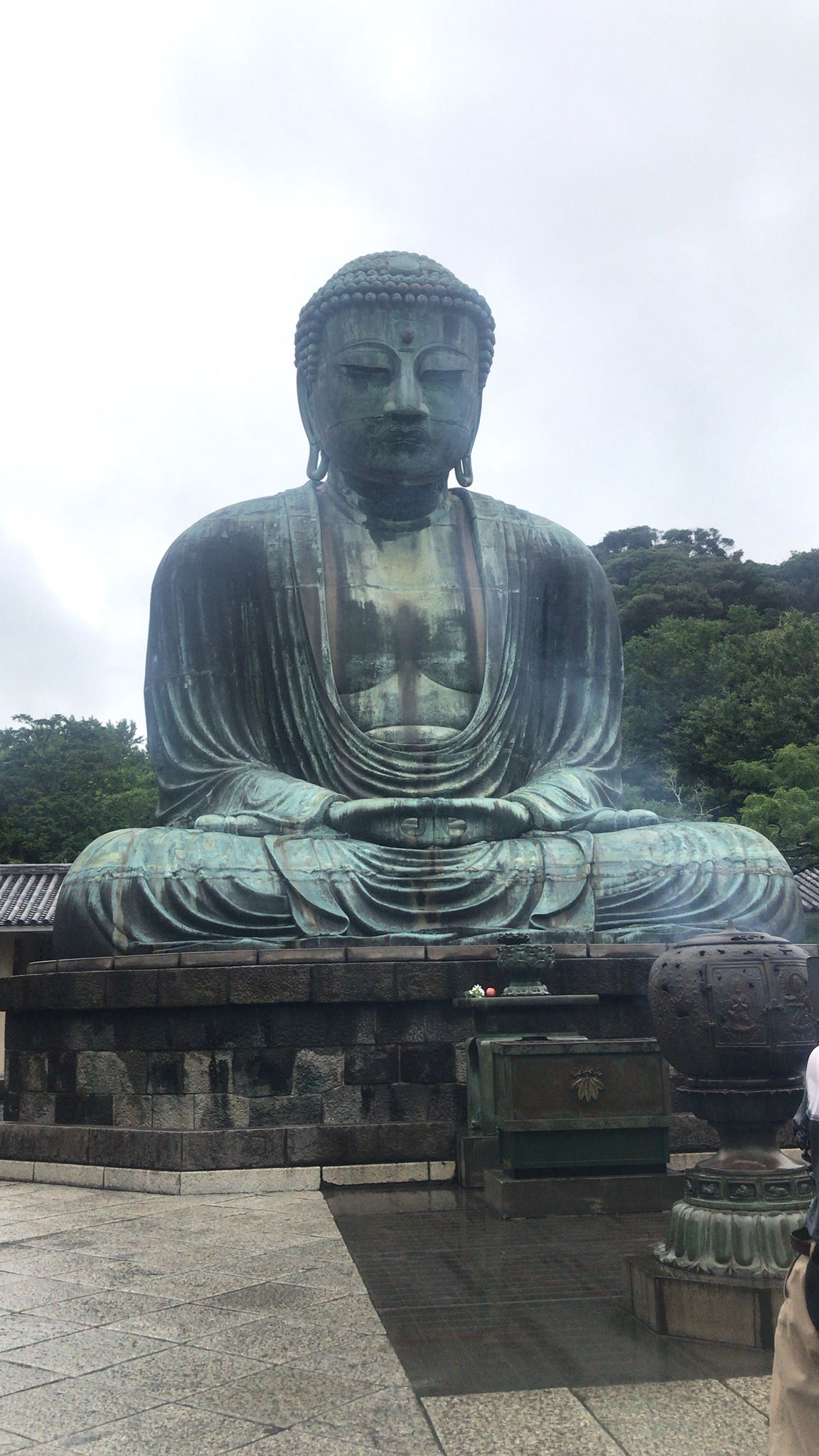
Visiting the Great Buddha last Tuesday had intrigued me to learn further about Buddhism and where and how it was originated, and some insight on Buddha’s life. Buddhism was first originated in India during the 6th century BC (“Japanese Buddhism”, n.d.). It consisted of the teachings of Buddha – also known as Siddhartha Gautama in Sanskrit or Siddhatta Gotama in Pali (Gethin, 1998). He was born near the border of Nepal and India in 6th Century to a wealthy family, being born with the status of a prince in the Shakaya Kingdom in modern-day Nepal (“Siddhartha Gautama”, n.d.). Upon being aware of the mass amounts of suffering humans face, he left his kingdom to become ascetic (practicing strict self-denial as a measure of personal and especially spiritual discipline (“DEFINITION OF ASCETIC”, N.D.). After becoming ascetic he developed the Middle Way which refers to Buddha’s enlightened view of life and also the actions or attitudes that will contribute towards creating happiness for oneself and others (“The Middle Way”, 2015). The search for the Middle Way is considered an endless pursuit for all Buddhist traditions. It is a quest for the way of life which will give the greatest value to human existence and help relieve humans from their world of suffering (“Siddhartha Gautama”, n.d.).
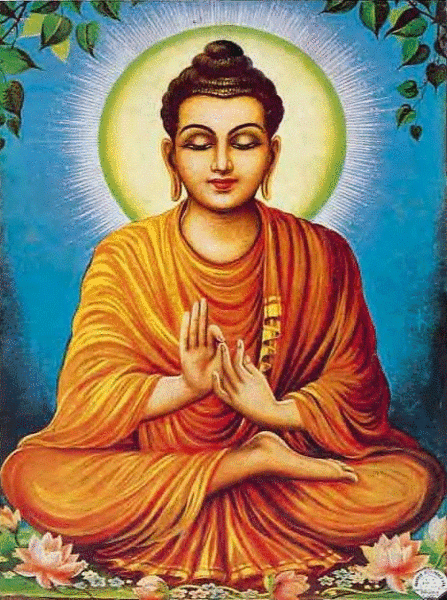
Being born a prince, Gautama had enjoyed every physical comfort and pleasure that life had offered him from an early age due to his family heritage. However, dissatisfied with the temporary pleasures, he set out on a search for a more meaningful truth (“The Middle Way”, 2015). During this period he was participating in extreme ascetic practice such as depriving himself of food and sleep which had almost bought him to his physical collapse (“The Middle Way”, 2015). However, upon sensing that his method of extreme ascetic was not helping him on his search, he began meditation with the eagerness to discover the truth of human existence. It was then during his rejection of self-mortification and self indulgence that Gautama had discovered the true nature of life – its eternity and bountiful supplies of vitality and wisdom (“Siddhartha Gautama”, n.d.).
He then spent the next 45 years preaching his philosophy across what is today known as Northern and Eastern India and Nepal. As he gained followers, he established his first sangha – body of Buddhist monks who would later go on to preserve and spread his teachings after his death (“Siddhartha Gautama”, n.d.).
By founding Buddhism, Siddhartha Gautama has forever altered the religious, social and cultural aspects of East and Southeast Asia. He influenced many individuals at that time who passed the information forward onto many generations to come.
References
Buddha Praying. (2019). [Image]. Retrieved from https://biographics.org/siddhartha-gautama-biography-the-buddha/
Definition of ASCETIC. Retrieved 22 July 2019, from https://www.merriam-webster.com/dictionary/ascetic
Gethin, R. (1998). The foundations of Buddhism (p. 14). Oxford [England]: Oxford University Press.
Japanese Buddhism. Retrieved 22 July 2019, from https://www.japan-guide.com/e/e2055.html
Siddhartha Gautama. Retrieved 22 July 2019, from https://berkleycenter.georgetown.edu/essays/siddhartha-gautama
The Middle Way. (2015). Retrieved 22 July 2019, from https://www.sgi.org/about-us/buddhist-concepts/the-middle-way.html
 Japan Trip 2019