It’s been 8 days since I landed in Japan and I’ve been granted with the most amazing opportunities to visit and see many amazing landmarks, shops and interesting suburbs. However one of the most interesting points I’ve noticed about Japan is that it seems to have an equal balance between the luscious greens and the sea of neon lights and tightly packed skyscrapers. Before I arrived, if someone had asked what I thought it would’ve been like over here I would’ve said “oh it’s probably all skyscrapers and hectic crowds, etc”, but over the past couple days of travelling to different areas and experiencing the more traditional aspects I’ve come to realise that Japan is a country filled with mass amounts of dichotomy – between the old and the new.
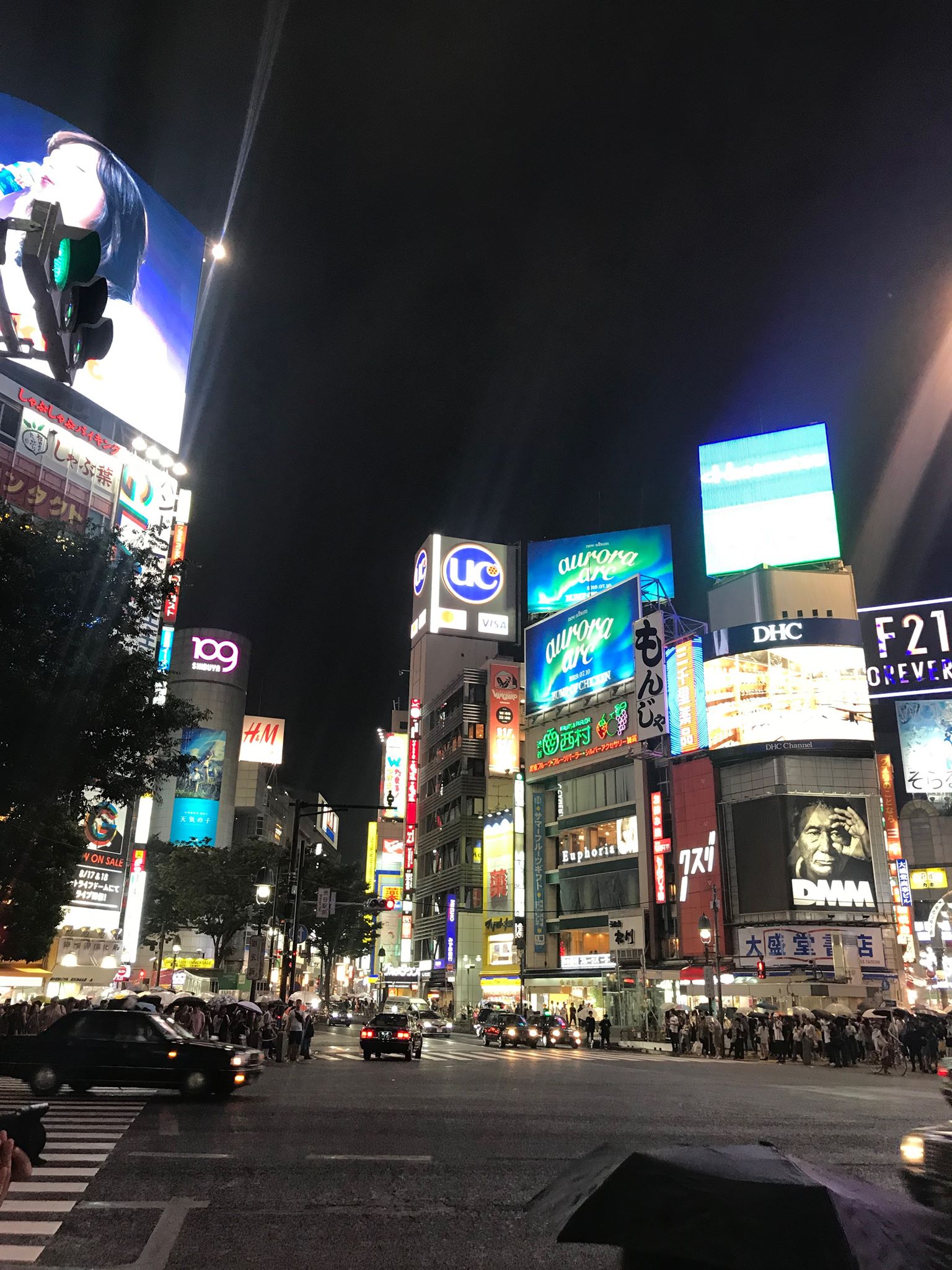
My first day in Tokyo was jam packed to say the least. Being in-between the tumultuous crowd was definitely a new experience for me here. According to statistics, it is noted that as many as 2500 people cross the streets every time the light changes (Joy, 2019), with over two million passengers a day (“Shibuya Crossing at Shibuya | Japan National Tourism Organization (JNTO)”, n.d.). This was definitely a one of a kind experience for me knowing that I was in-between thousands of people in a city that never truly sleeps. This made me wonder how Shibuya came to be so swarmed by mass amounts of crowd and covered in eclecticism. First opening in 1885, Shibuya Station acted as a stop on the Nippon Railway’s (Akabane) Shingawa Line (Hornyak, n.d.). During that time it was known as a ‘sleepy residential backwater area’ (Hornyak, n.d.), however four years later it grew into a commercial and entertainment district quite quickly, going as far as to incorporate a village in 1889 (Hornyak, n.d.). In 1927, Tokyu Corporation had began constructing a railway service that would link down to Yokohama – setting Shibuya on the path to becoming one of the biggest railway line hubs (Hornyak, n.d.). One of the most popular story concerning Shibuya would have to be the story of Hachiko. A loyal dog who awaited his owners return after his death (“Shibuya Crossing at Shibuya | Japan National Tourism Organization (JNTO)”, n.d.). This tear-jerking story was later adapted into a famous 2009 Hollywood movie (titled Hachi) which added to the popularity of Shibuya (which displayes the Hachiko statue).
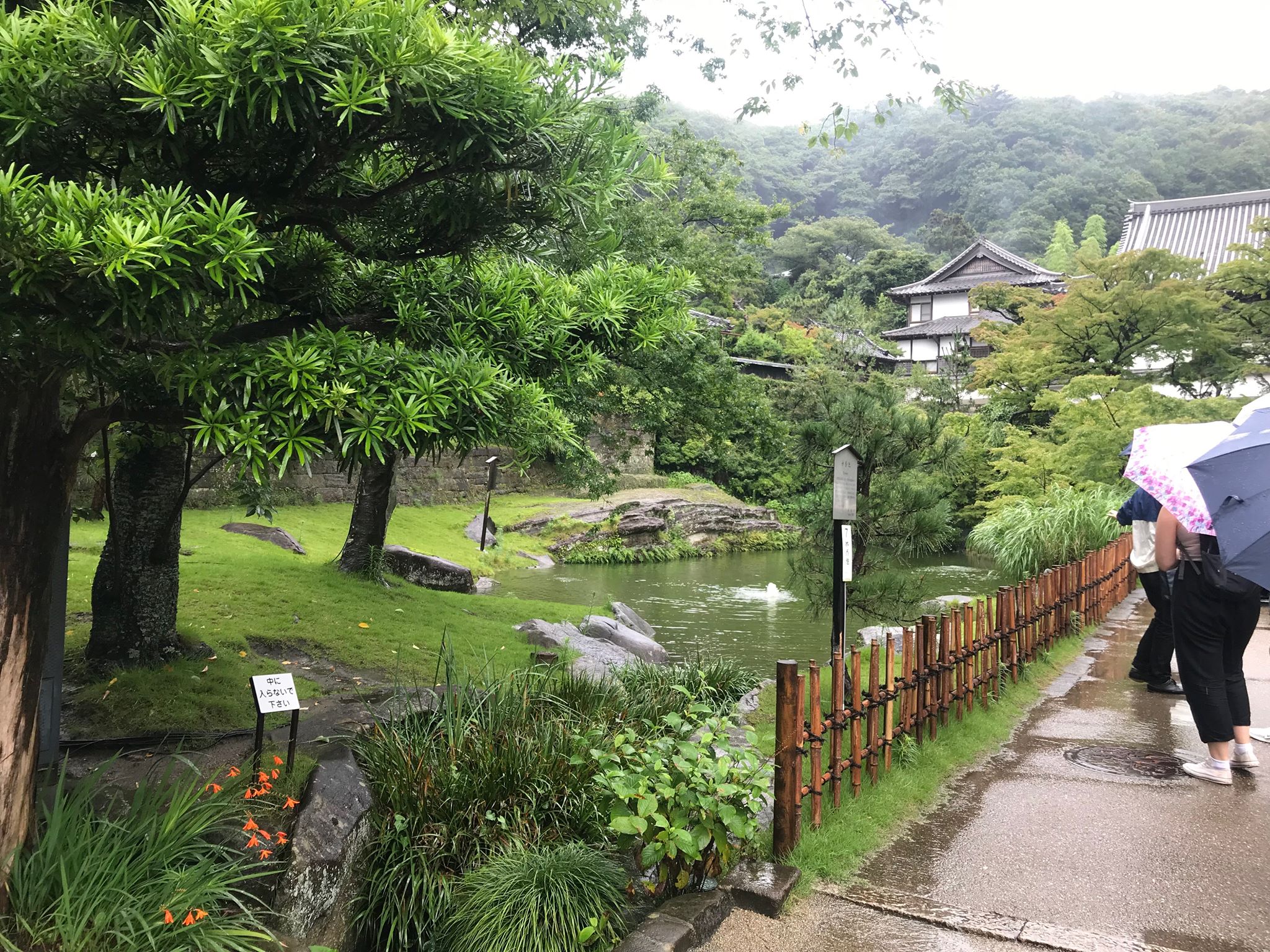
Experiencing the rush of the city in Tokyo had exceeded all my expectations, however it left me feeling incredibly fatigued and run-down. This left me wondering what the contrast of the bright city would be like, and how it would feel to be between the much more peaceful and calming side of Japan. On Tuesday (16/07/2019) and Wednesday (17/07/2019) I finally got to experience the true beauty of Japanese nature and luscious greens. Upon arrival to our destination in Kamakura I was instantly greeted by the sight of trees upon trees, and different types of flora.
Kamakura 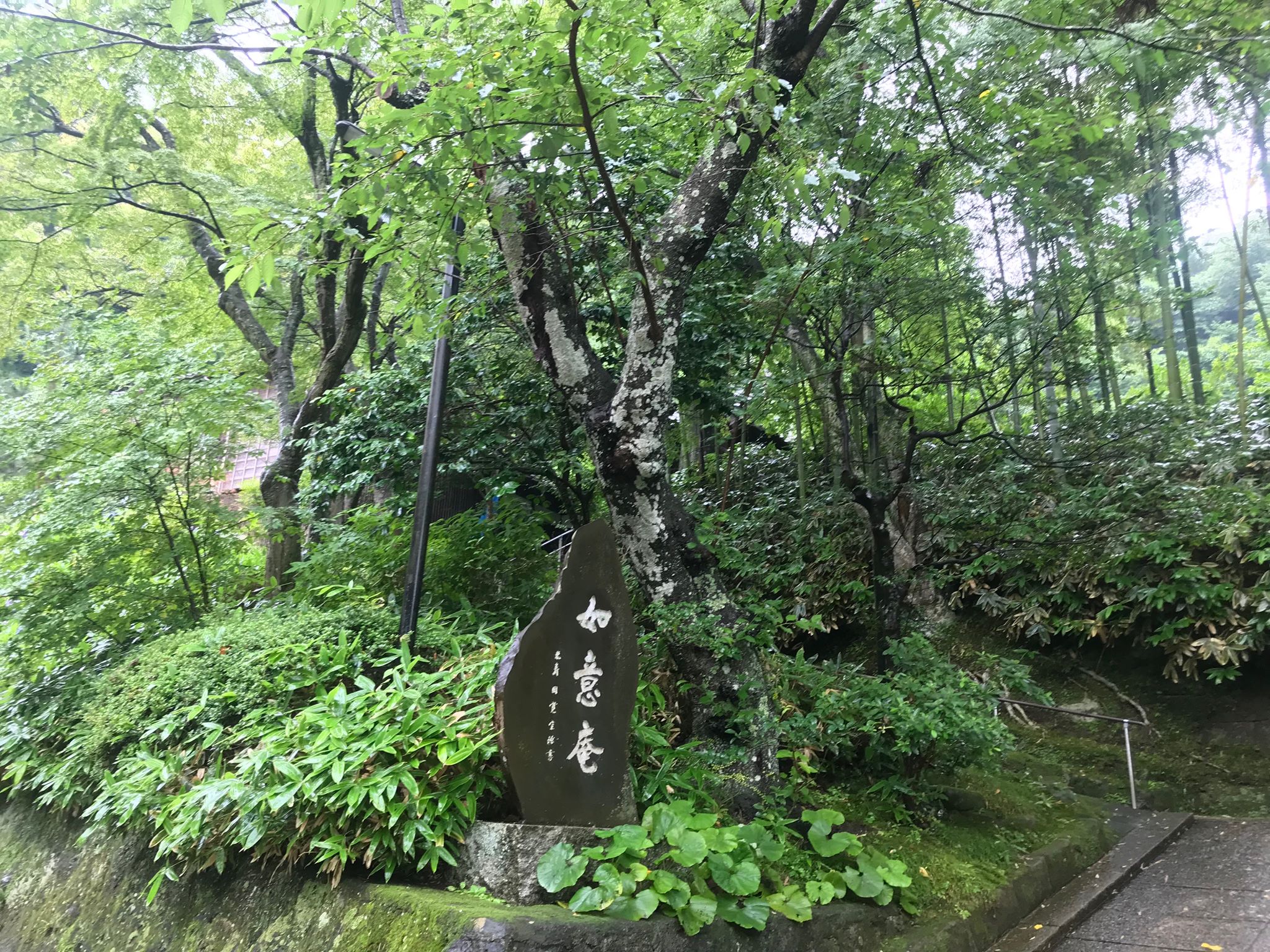
Kamakura
The sight of the everlasting greenery made me extremely excited as I had never before experienced or seen anything like it. To understand the relationship between the locals and harmonious nature I researched further into it to find if there is a deeper connection between the two. Since ancient times, forests have been in various countless tales and artworks as symbols of mystery and enchantment (“Creating a Society in Harmony with Nature”, n.d.). For humans, forests are seen as a lifeline as they supply wood and other resources of high importance to our everyday activities, as well as provide space for rest and relaxation. Japanese peoples reverence for natural life allows them to coexist with nature as they respect and appreciate life in all aspects of nature ranging from; landscapes, climates and seasonal changes (“Creating a Society in Harmony with Nature”, n.d.). As Japan is covered by large varieties of trees everywhere, it has also helped influence Japanese values as Japanese people have loved cherry blossom and plums since the ancient times and have shown their appreciation towards its beauty by writing poetry about them.
Viewing the contrast between the man-made attractions and the natural attractions has been by far the most amazing experience for me. As any other tourist would be, I’m definitely awe-struck by the beauty here. However the experience of learning about each of the attractions (the history) along with being able to visit each attraction to grasp a better understanding has definitely been the highlight for me as a student.
 Japan Trip 2019
References:
Creating a Society in Harmony with Nature. Retrieved 21 July 2019, from https://www.u-tokyo.ac.jp/en/whyutokyo/wj_002.html
Hornyak, T. Shibuya Station History – Shibuya Station. Retrieved 21 July 2019, from https://www.shibuyastation.com/shibuya-station-history/
Joy, A. (2019). A Short History of Tokyo’s Shibuya Crossing. Retrieved 21 July 2019, from https://theculturetrip.com/asia/japan/articles/tokyos-most-iconic-attraction-shibuya-crossing/
Shibuya Crossing at Shibuya | Japan National Tourism Organization (JNTO). Retrieved 21 July 2019, from https://www.jnto.go.jp/ph/spot-activity/kanto/tokyo/shibuya/shibuya-crossing/
LikeLike